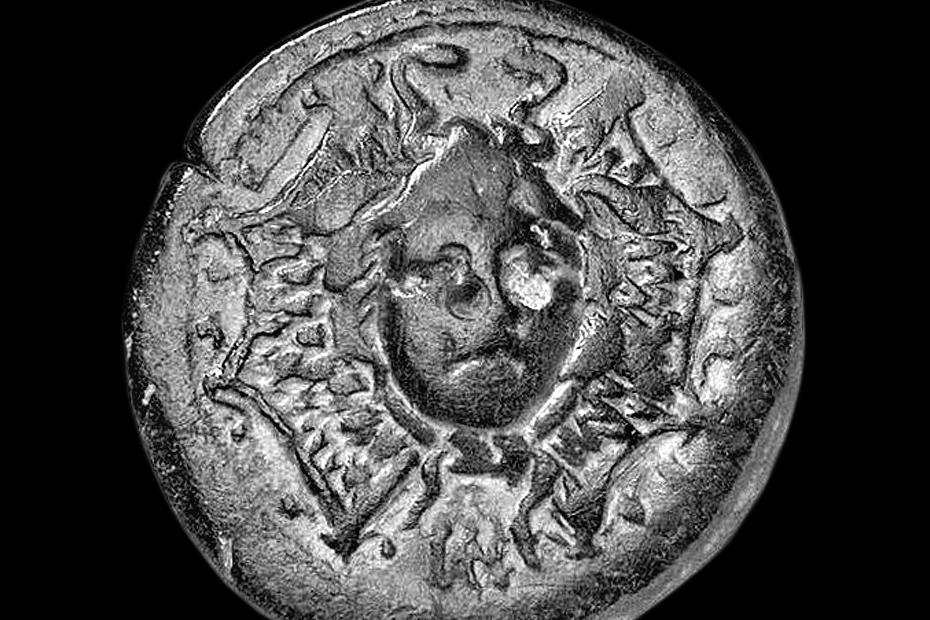
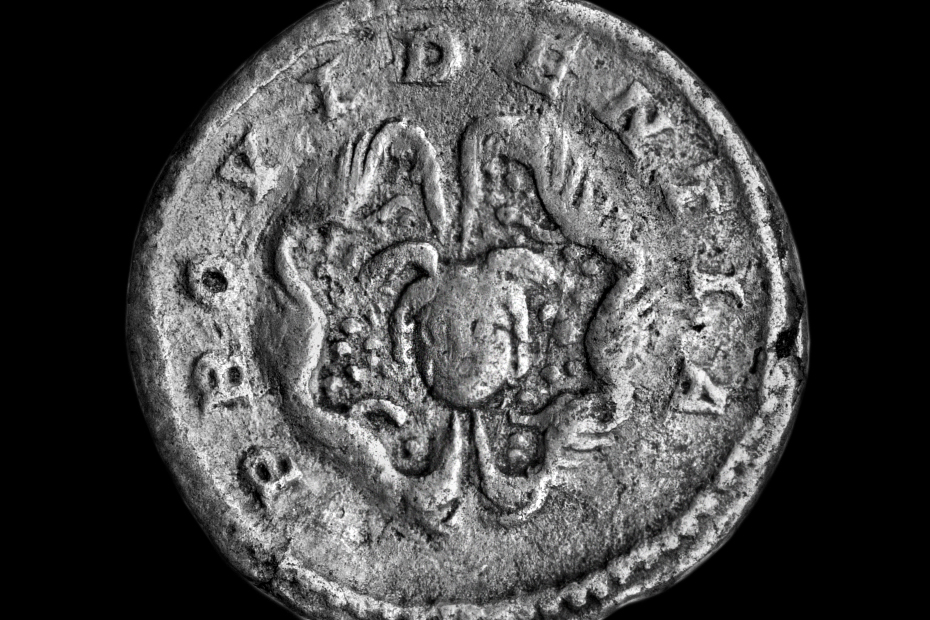
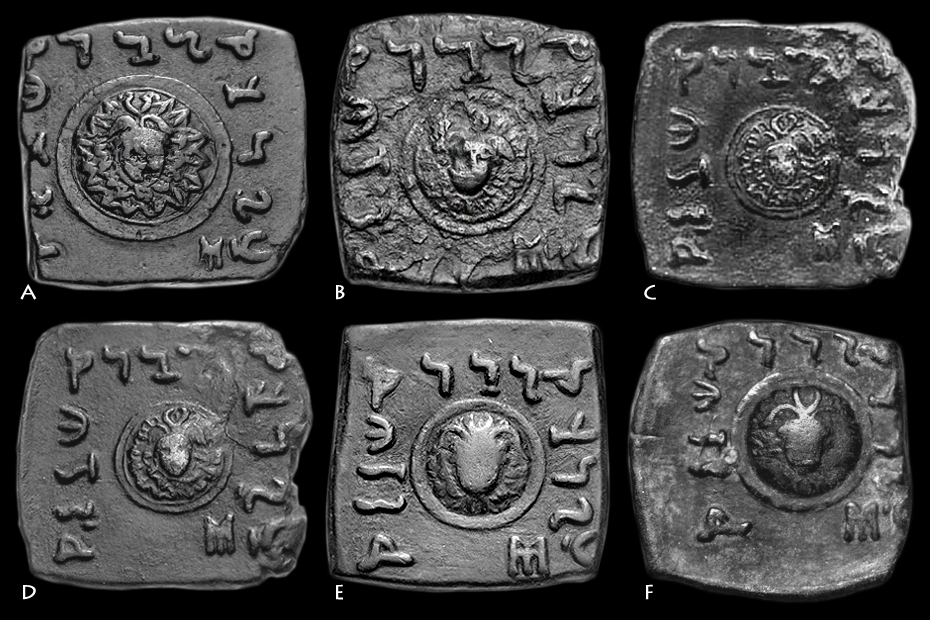
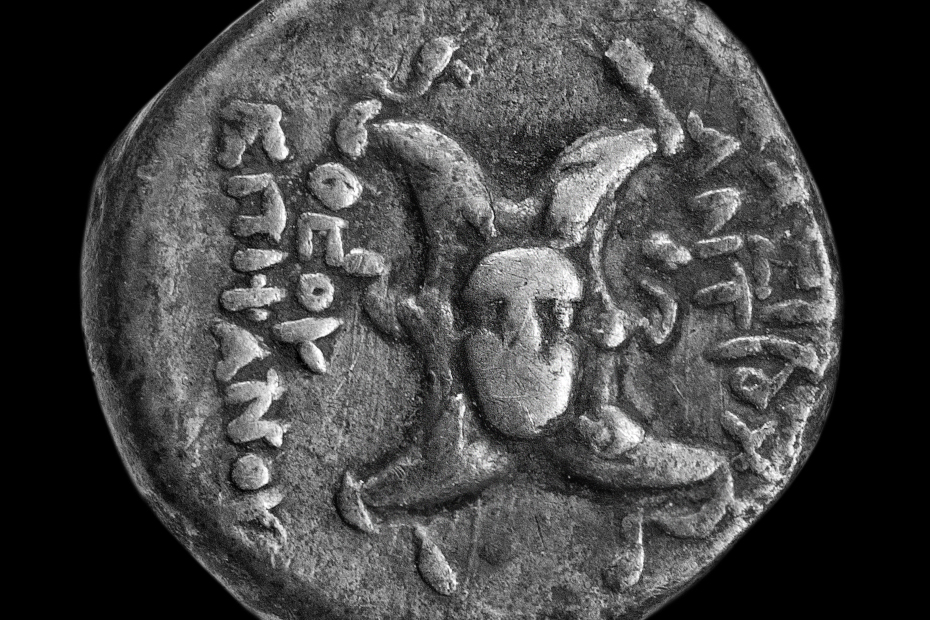
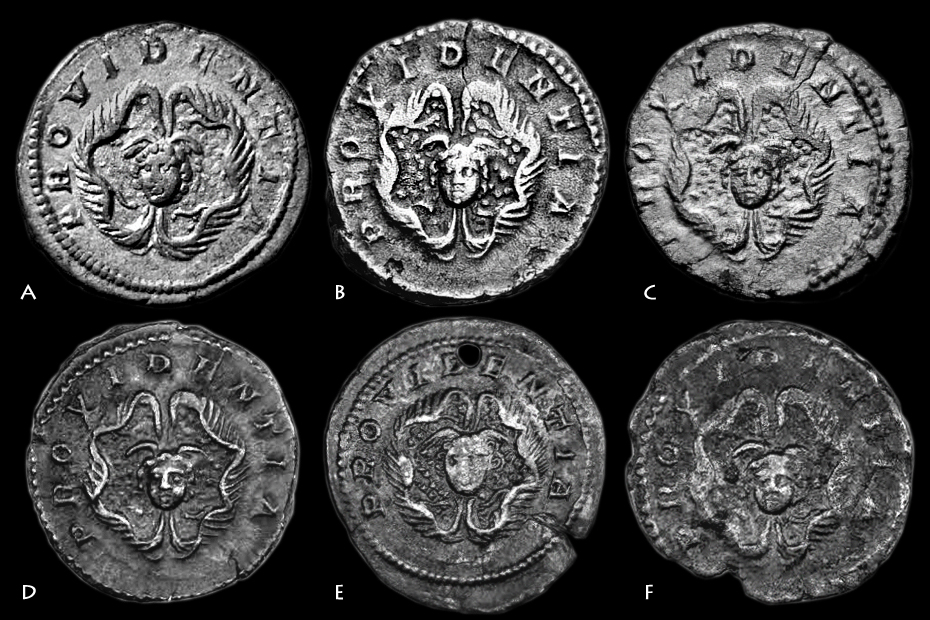
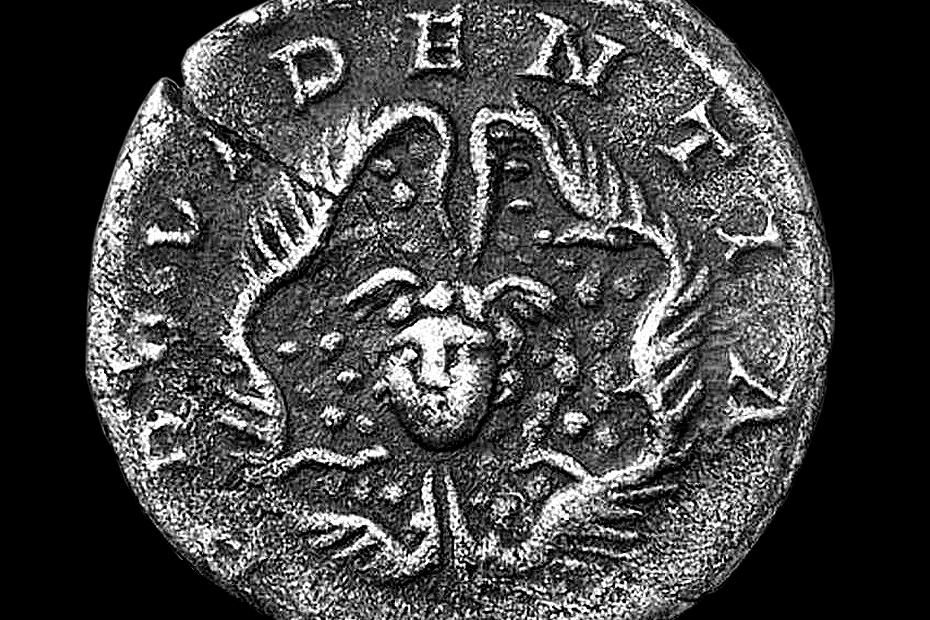
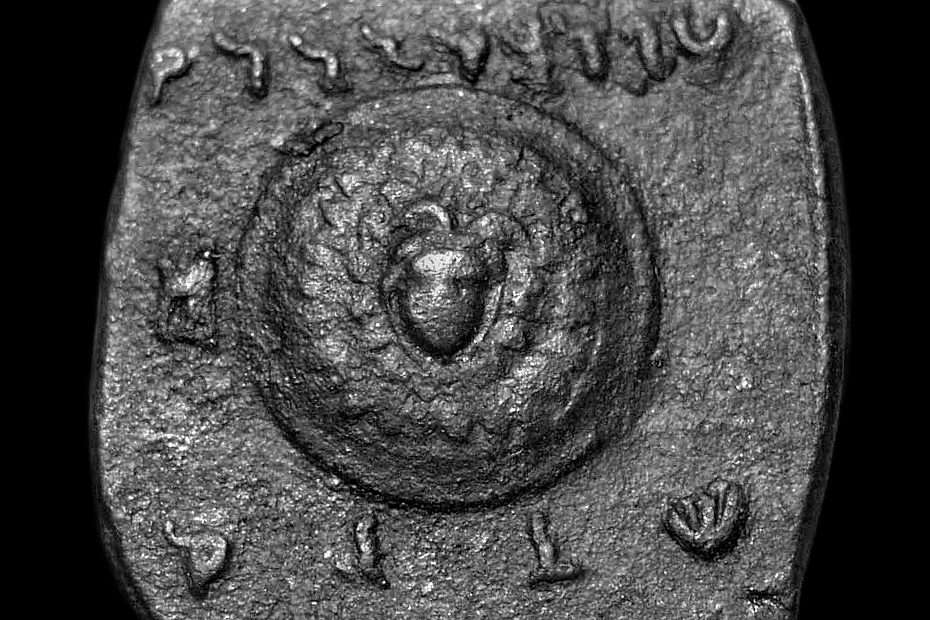
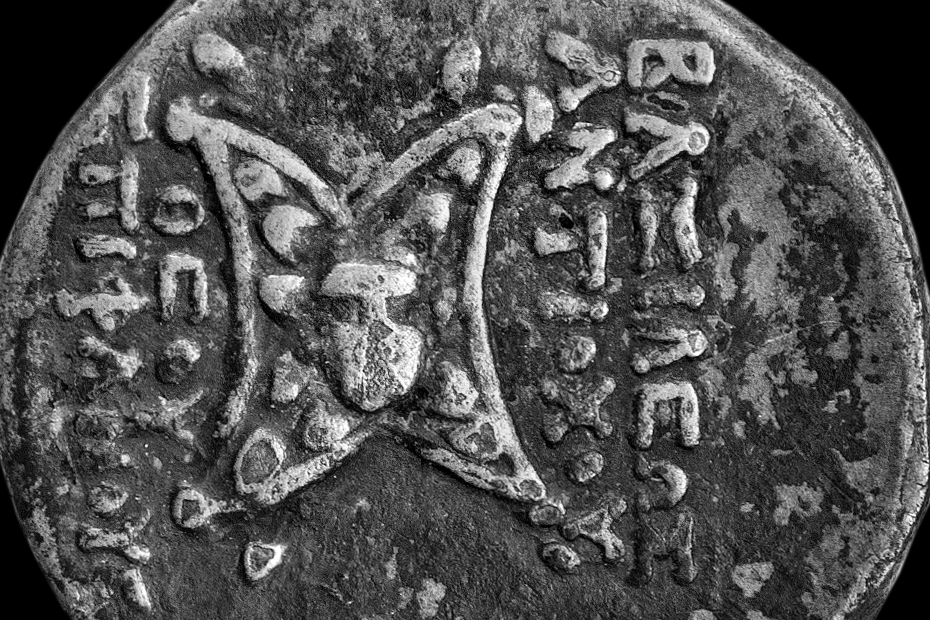
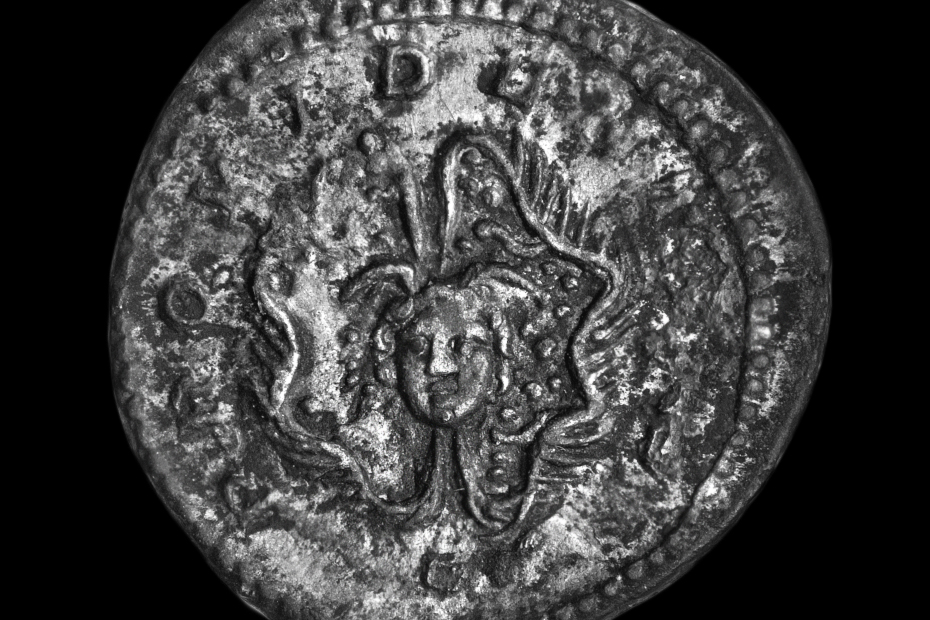
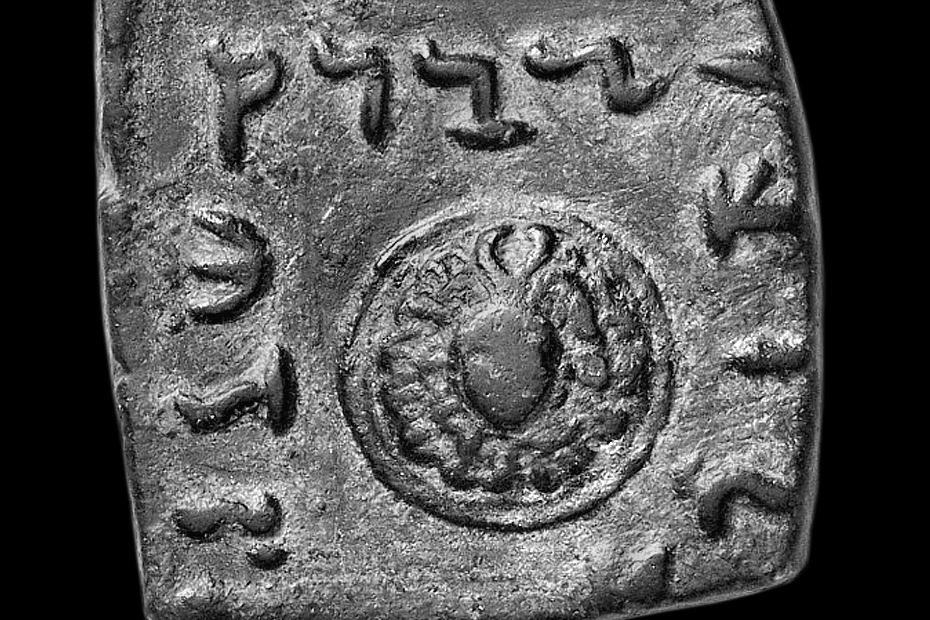
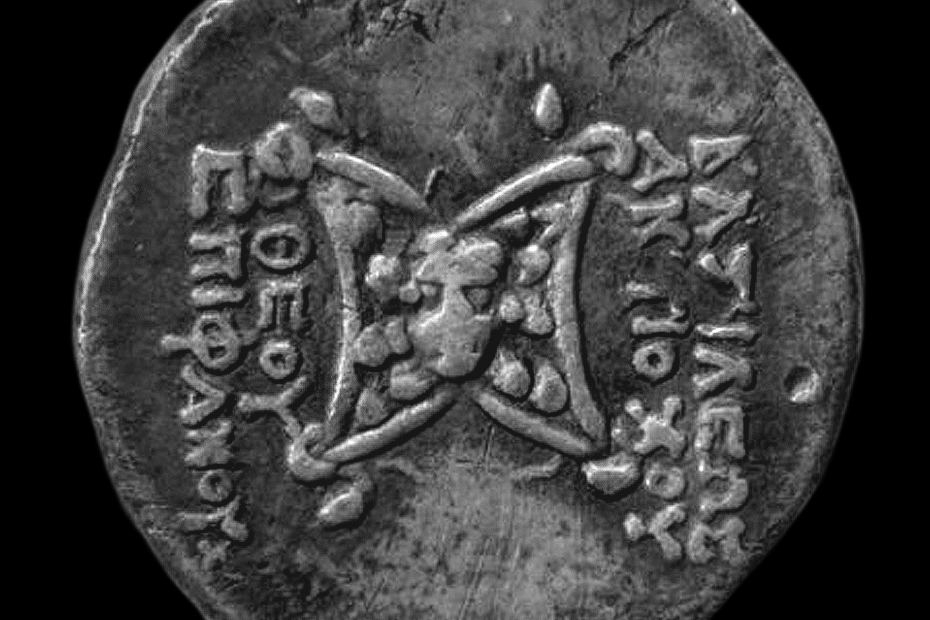
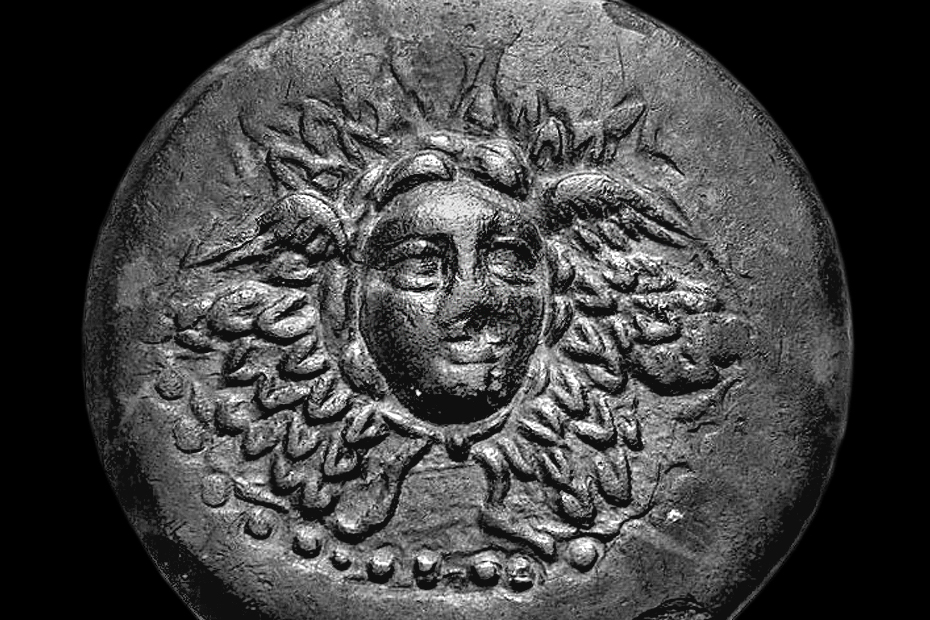
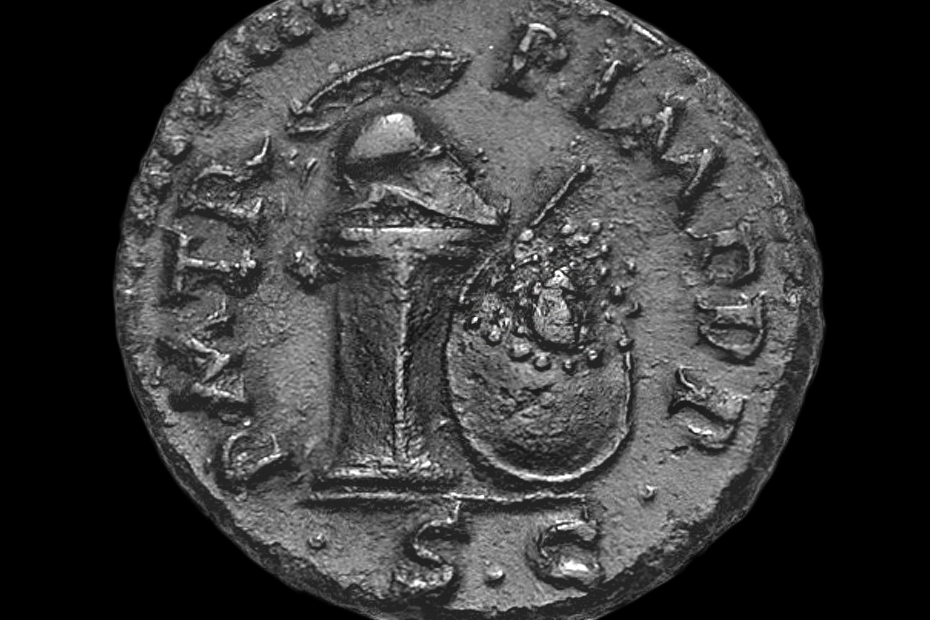
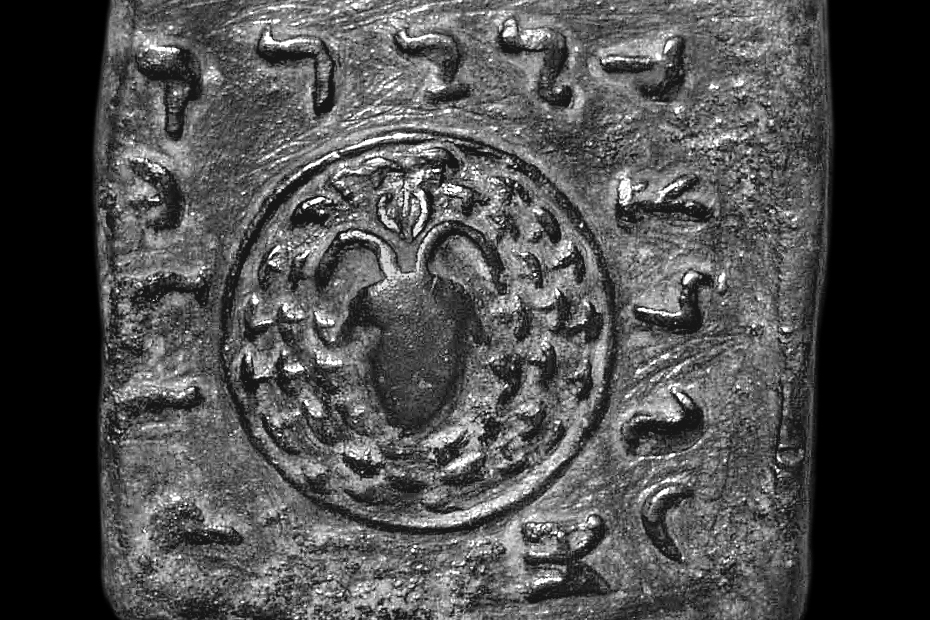
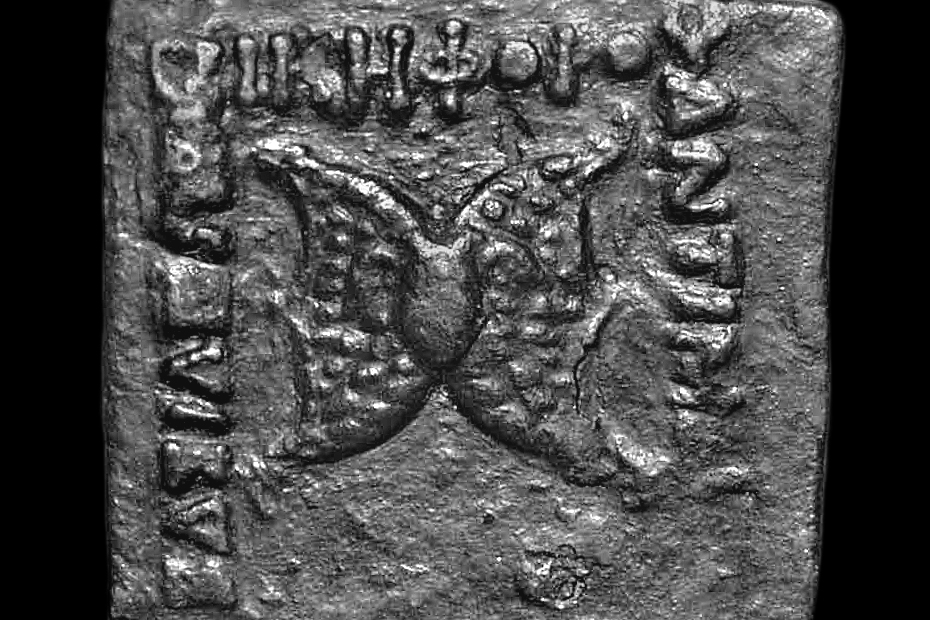
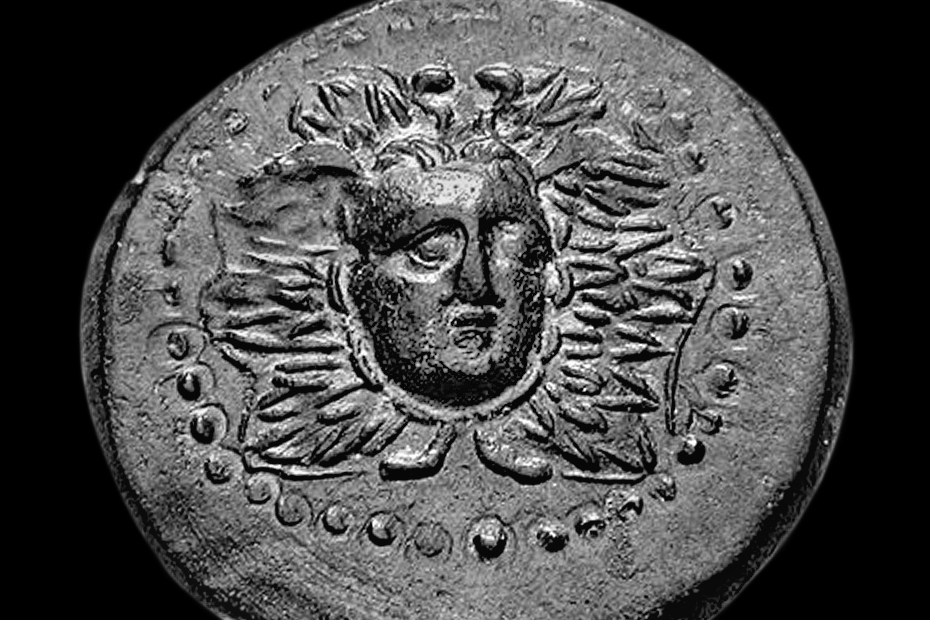
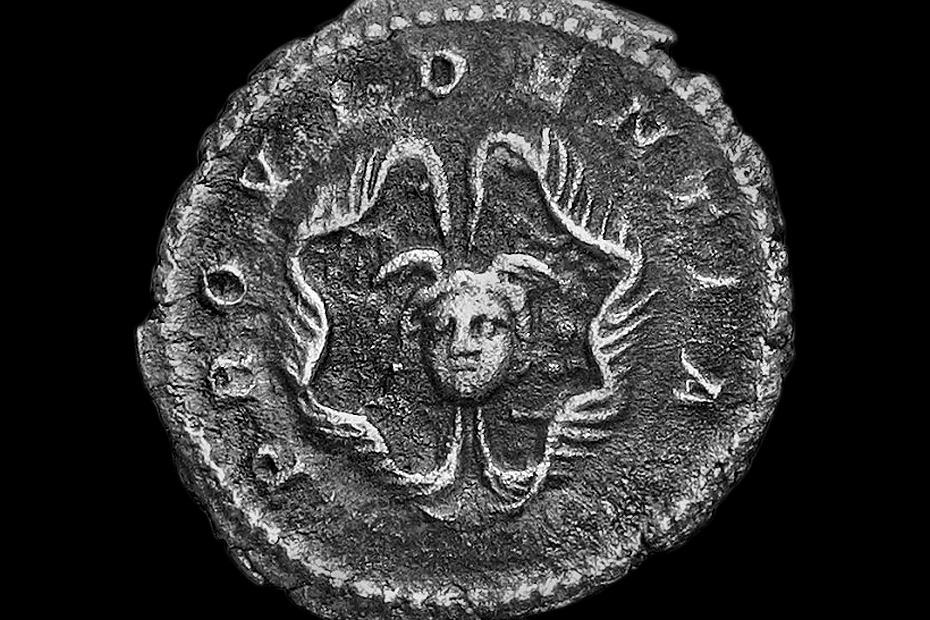
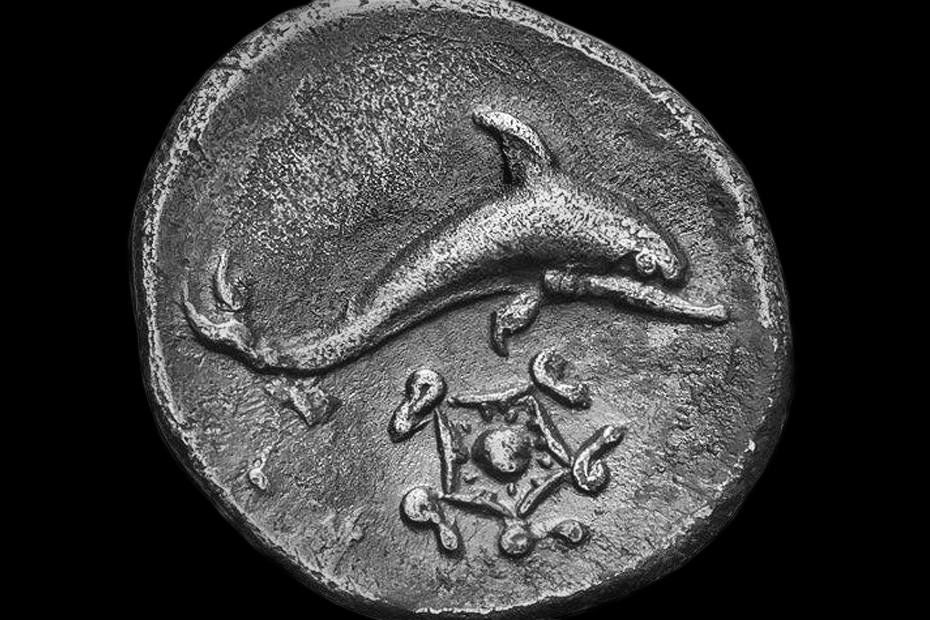
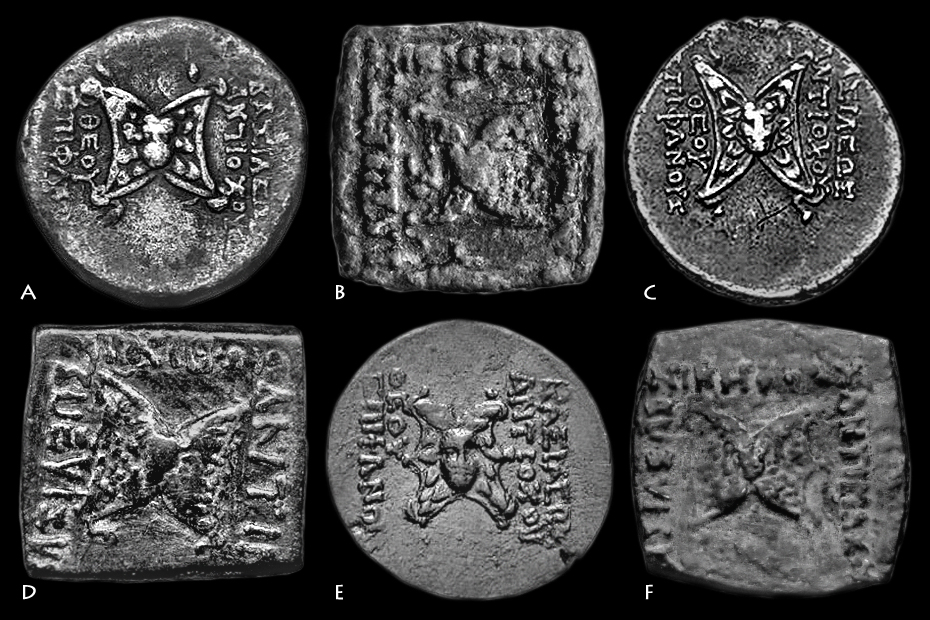
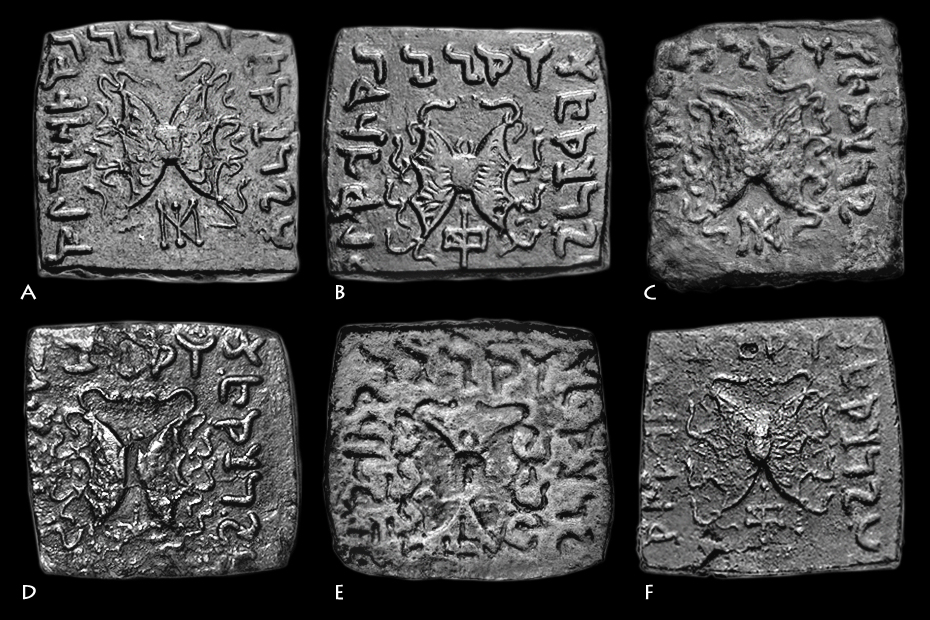
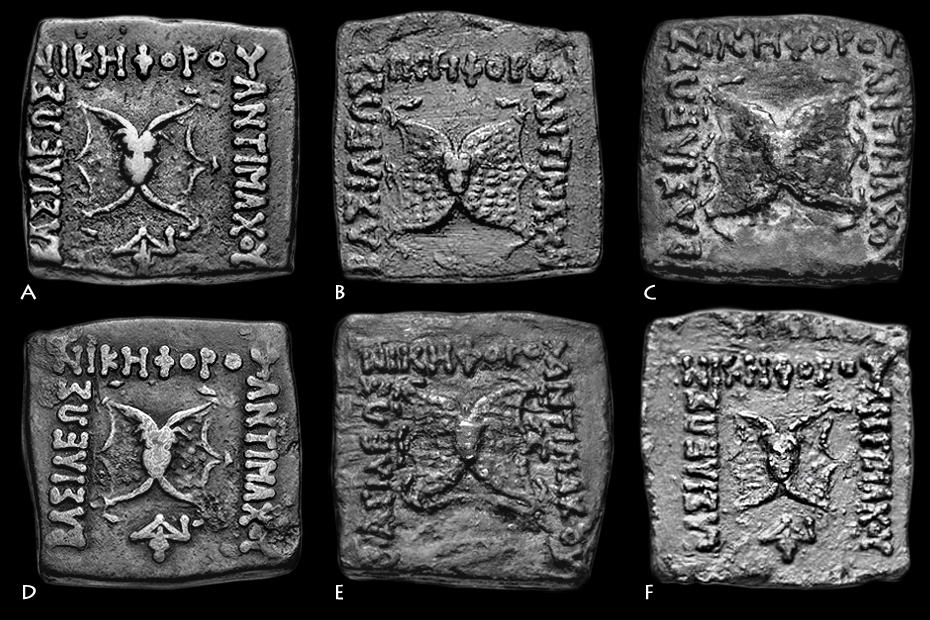
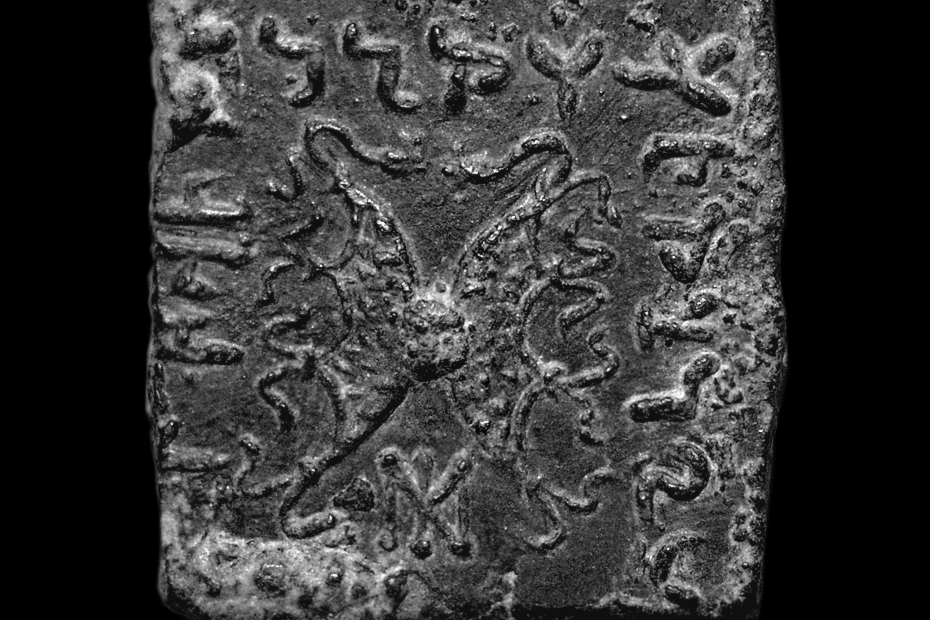
Set III-6-aeg-002. In Greek mythology, aegis was an apotropaic device in form of an animal skin, often decorated with a snakes-fringe and gorgoneion (the severed head of Gorgon Medusa). Aegis was usually depicted with scaly surface and was used in different modes: neck-aegis, torso-aegis, cloak-aegis, shoulder-&-arm-aegis, shield-aegis, and helmet-aegis. It was carried among gods almost exclusively by Athena and Zeus. It was also used as a high-status decorative device by many Hellenistic rulers and Roman Emperors.
------------------------------------------------- « ● Selected Classical Quotations ● » --------------------------------------------------
“ But packed in a mass the Trojans came on pounding, Hector leading the way with long, leaping strides and heading the van in person came the god Apollo, shoulders wrapped in cloud, gripping the storm-shield [αἰγίς, aegis], the tempest terror, dazzling, tassels flaring along its front - The bronzesmith god of fire gave it to Zeus to bear and strike fear in men and Apollo gripped it now, locked in his two fists as he led the Trojans on. But packed in a mass the Argives stood their ground, deafening cries of battle breaking from both sides as whipping arrow leapt away from bowstrings. Showers of spears raining from daring, hardy arms went deep into soldiers' bodies quick to fight but showers of others, cut short halfway before they could graze glistening skin, stuck in the ground, still lusting to sink in flesh. Long as Apollo held the storm-shield [αἰγίς, aegis] firm in his grasp the weapons hurtled side-to-side and men kept falling. But once he looked the fast Achaean drives square in the eyes, shook the shield and loosed an enormous battle cry himself, Apollo stunned the high courage in all their chests - they lost their grip, forgot their fighting-fury. Routed like herds of cattle or big flocks of sheep when two wild beasts stampede them away in terror, suddenly pouncing down in their midst - pitch darkness, the shepherd off and gone - so the defenseless Argives panicked, routed. Apollo hurled fear in their hearts and handed Hector and all his Trojans instant glory. {...} Holding formation now the Trojans rolled across it, Apollo heading them, gripping the awesome storm-shield [αἰγίς, aegis] and he tore that Argive rampart down with the same ease some boy at the seashore knocks sand castles down - he no sooner builds his playthings up, child's play, than he wrecks them all with hands and kicking feet, just for the sport of it. God of the wild cry, Apollo - so you wrecked the Achaeans' work and drove the men who had built up with all that grief and labour into headlong panic rout. „
● Homer (700s-600s BC), Iliad XV: 360-387, 423-432 | Translated by Robert Fagles. Copyright © 1990.
--------------------------------------------------------------------- « ● ● ● » ---------------------------------------------------------------------
“ With that he [Ares] struck Athena's tasseled aegis. So the magic cloak, which can withstand even the thunderbolt of Zeus, endured a blow from the long spear of the murderous War-god. „
● Homer (700s-600s BC), Iliad XXI: 400-402 | Translated by Emile V. Rieu. Copyright © 1950.
--------------------------------------------------------------------- « ● ● ● » ---------------------------------------------------------------------
“But dead though Hector was, Apollo still felt pity for the man and saved his flesh from all pollution. Moreover, he wrapped him in his golden aegis, so that Achilles should not scrape his skin when he was dragging him along. „
● Homer (700s-600s BC), Iliad XXIV: 018-021 | Translated by Emile V. Rieu. Copyright © 1950.
--------------------------------------------------------------------- « ● ● ● » ---------------------------------------------------------------------
“ {...} Zeus who bears the aegis {...} aegis-bearing Zeus {...} „
● Homer (700s-600s BC), Odyssey IV: 752, 763; VI: 105, 325; XI: 256; XXIV: 529 | Translated by Emile V. Rieu. Copyright © 1946.
--------------------------------------------------------------------- « ● ● ● » ---------------------------------------------------------------------
“ And now, high in the roof above their heads, Athena raised her deadly aegis. The Suitors were scared out of their senses. „
● Homer (700s-600s BC), Odyssey XXII: 297-298 | Translated by Emile V. Rieu. Copyright © 1946.
--------------------------------------------------------------------- « ● ● ● » ---------------------------------------------------------------------
“ {...} Zeus who holds the aegis {...} aegis-bearing Zeus {...} „
● Hesiod (700s-600s BC), Theogony: 011, 013, 025, 052, 735, 966, 1022 | Translated by Dorothea Wender. Copyright © 1973.
--------------------------------------------------------------------- « ● ● ● » ---------------------------------------------------------------------
“ {...} Zeus who holds the aegis {...} aegis-bearing Zeus {...} „
● Hesiod (700s-600s BC), Works and Days: 483, 661 | Translated by Dorothea Wender. Copyright © 1973.
--------------------------------------------------------------------- « ● ● ● » ---------------------------------------------------------------------
“ {...} aegis-holding Zeus {...} „
● Hesiod (700s-600s BC) (?), The Shield [Άσπίς]: 321 | Translated by Glenn W. Most. Copyright © 2007.
--------------------------------------------------------------------- « ● ● ● » ---------------------------------------------------------------------
“ Upon it stood Zeus' daughter, leader of the war-host, Tritogenia, and she looked as though she wanted to prepare for battle, holding a spear in her hand, and a golden helmet, and the aegis around her shoulders. And she was going off towards dread battle. {...} by shaking her aegis the goddess, bright-eyed Athena, had cast strength into them, and all around the earth groaned. {...} But Athena, the daughter of aegis-holding Zeus, came opposite Ares, holding the dark aegis; scowling terribly at him she spoke winged words: "Ares, restrain your mighty strength and your untouchable hands: for it is not right for you to kill Heracles, Zeus' bold-hearted son, and strip his famous armour. Come then, cease from battle, and do not stand opposing me." „
● Hesiod (700s-600s BC) (?), The Shield [Άσπίς]: 197-200, 343-344, 443-449 | Translated by Glenn W. Most. Copyright © 2007.
--------------------------------------------------------------------- « ● ● ● » ---------------------------------------------------------------------
“ {...} Zeus who holds the aegis {...} „
● Anonymous (600s-500s BC), Homeric Hymns IV: To Hermes, 183, 396, 551; V: To Aphrodite, 008, 024, 026, 187; XXVIII: To Athena, 008, 017 | Translated by Jules Cashford. Copyright © 2003.
--------------------------------------------------------------------- « ● ● ● » ---------------------------------------------------------------------
“ O Nymphs, who they say are sprung from the Aegis-Bearer [Zeus] {...} „
● Alcaeus of Mytilene (620-500s BC), To the Nymphs (in Lyra Graeca I, LCL, Fragment № 16, Hephaestion (fl. 100s AD), Handbook of Metre, 66) | Translated by John Maxwell Edmonds. Copyright © 1922-1927.
--------------------------------------------------------------------- « ● ● ● » ---------------------------------------------------------------------
“ There too the all-powerful, fire-breathing thunderbolt is shaken, as is Enyalios' [Ares'] spear, and the intrepid aegis of Pallas [Athena] rings out with the hisses of countless snakes [δράκων]. „
● Pindar (522-443 BC), Dithyramb II: 015-018 | Translated by William H. Race. Copyright © 1997.
--------------------------------------------------------------------- « ● ● ● » ---------------------------------------------------------------------
“ {...} Athena of the warring aegis. „
● Bacchylides (518-451 BC), The Young Men and Maidens or Theseus (in Lyra Graeca III, LCL, Fragment № 12 (xvi)) | Translated by John Maxwell Edmonds. Copyright © 1922-1927.
--------------------------------------------------------------------- « ● ● ● » ---------------------------------------------------------------------
“ {...} the fair-wrought temple of Itonia [Athena] of the golden aegis {...} „
● Bacchylides (518-451 BC), Dance-Songs (in Lyra Graeca III, LCL, Fragment № 26) | Translated by John Maxwell Edmonds. Copyright © 1922-1927.
--------------------------------------------------------------------- « ● ● ● » ---------------------------------------------------------------------
“ It was from the women of Libya that the Hellenes adopted the garments and aegis of Athena's cult image. For except for the fact that the Libyan women wear a garment made of leather and that from their aegises hang tassels made of thongs rather than snakes [ὄφις], they dress exactly the same as the image in all other respects. Moreover, the very name of the apparel worn by the statues of Pallas discloses its Libyan origin. For the Libyan women put hairless goatskins with madder-dyed [red] tassels over their dresses, and it is from these goatskins (aegeae) that the Hellenes coined the term "aegis". „
● Herodotus (484-425 BC), Histories IV: 189, 1-3 | Translated by Andrea L. Purvis & Robert B. Strassler. Copyright © 2007.
--------------------------------------------------------------------- « ● ● ● » ---------------------------------------------------------------------
“ My eyes dart everywhere. See! The battle of the giants on the marble walls. Yes we are looking. Can you see her, brandishing her Gorgon shield against Encelados? I can see my goddess Pallas Athena. {...} You know the war fought by Earth's sons? // When giants fought against the gods at Phlegra. // Earth there produced an awful monster, Gorgon. // To harass all the gods and help her children? // Yes, but destroyed by Zeus's daughter Pallas. // Is this the tale which I have heard before? // Yes, that she wears its skin upon her breast. // Athena's armor which they call her aegis? // So called from how she rushed into the battle. // What was the form of this barbaric thing? // A breastplate armed with serpent [Ø] coils. // But my child, what harm can this do to your foes? // You know Erichthonius? - Of course you must. // The founder of your house, the son of Earth. // A newborn child, Athena gave to him - // Yes, what is this you [Creusa] hesitate to say? // Two drops of Gorgon's blood. // And these have some effect on men? // One is poisonous, the other cures disease. // But how did she attach them to the child? // A golden chain which he gave to my father [Erechtheus]. // And when he died it came to you? // Yes, I always wear in on my wrist. // How is the twofold gift compounded then? // The drop extracted from the hollow vein - // How is it to be used? What power has it? // It fosters life and keeps away disease. // What action does the other of them have? // It kills - a poison from the Gorgon's snakes [δράκων]. // You carry them apart or mixed together? // Apart. For good and evil do not mingle. {...} This cradle - has it anything inside? // It has the things you [Ion] wore when I [Creusa] exposed you. // And can you give their names before you see them? // I can; and, if I fail, consent to die. // Then speak. Your audacity is strange indeed. // Look for the weaving which I did in childhood. // Describe it; girls do many kinds of work. // It is unfinished, a kind of trial piece. // And its design - You cannot cheat me there. // There is a Gorgon in the center part. // O Zeus! What fate is this to track us down! // The stuff is fringed with serpents [ὄφις] like an aegis. // And here it is - found like an oracle! // The loom-work of a girl - so long ago. // And anything else? Or will your luck fail now? // Serpents [δράκων], the custom of our golden race. // Athena's gift, who bids you wear them? // Yes, in memory of Erichthonius. // What do they do with this golden ornament? // It is a necklace for a newborn child. // Yes, here they are. I long to know the third. // I put an olive wreath around you, from the tree Athena first planted on the rock; if that is there, it has not lost its green, but flourishes because the tree is holy. {...} Aegicores, the name from my own [Athena's] aegis. „
● Euripides (480-406 BC), Ion: 205-211, 987-1017, 1412-1436, 1581 | Translated by Ronald Frederick Willetts. Copyright © 1958.
--------------------------------------------------------------------- « ● ● ● » ---------------------------------------------------------------------
“ There I saw Rhesus like a god upright behind his horses in the Thracian car. The golden balance of a yoke inclosed the necks of his young horses, and these were whiter than snow. The buckler on his shoulders glowed with beaten plates of gold, and as upon a goddess' [Athena's] aegis, the bronze face of a gorgon on the horses' frontlet shields glared, and with bells beat out a clashing sound of fear. „
● Euripides (480-406 BC), Rhesus: 301-308 | Translated by Richmond Lattimore. Copyright © 1958.
--------------------------------------------------------------------- « ● ● ● » ---------------------------------------------------------------------
“ The dreadful beast-faced goddesses of destiny will roll you [Orestes] like a wheel through maddened wandering. But when you come to Athens, fold the holy wood of Pallas' [Athena's] statue to your breast - then she will check the fluttering horror of their snakes [δράκων], they cannot touch you as she holds her Gorgon-circled shield above your head. „
● Euripides (480-406 BC), Electra: 1252-1257 | Translated by Emily Townsend Vermeule. Copyright © 1958.
--------------------------------------------------------------------- « ● ● ● » ---------------------------------------------------------------------
“ For protective devices they [Amazons] used the skins of large snakes [ὄφις], since Libya contains such animals of incredible size, and for offensive weapons, swords and lances; they also used bows and arrows, with which they struck not only when facing the enemy but also when in flight, by shooting backwards at their pursuers with good effect. „
● Diodorus Siculus (90-30 BC), Historical Library III: 53, 3 | Translated by Charles H. Oldfather. Copyright © 1933-1954.
--------------------------------------------------------------------- « ● ● ● » ---------------------------------------------------------------------
“ And according to the myth this goddess [Athena], choosing to spend all her days in maidenhood, excelled in virtue and invented most of the crafts, since she was exceedingly ready of wit; she cultivated also the arts of war, and since she excelled in courage and in bodily strength she performed many other deeds worthy of memory and slew the Aegis, as it was called, a certain frightful monster which was a difficult antagonist to overcome. For it was sprung from the earth and in accordance with its nature breathed forth terrible flames of fire from its mouth, and its first appearance it made about Phrygia and burned up the land, which to this day is called "Burned Phrygia"; and after that it ravaged unceasingly the lands about the Taurus mountains and burned up the forests extending from that region as far as India. Thereupon, returning again towards the sea round about Phoenicia, it sent up in flames the forests on Mt. Lebanon, and making its way through Egypt it passed over Libya to the regions of the west and at the end of its wanderings fell upon the forests about Ceraunia. And since the country round about was going up in flames and the inhabitants in some cases were being destroyed and in others were leaving their native countries in their terror and removing to distant regions, Athena, they say, overcoming the monster partly through her intelligence and partly through her courage and bodily strength, slew it, and covering her breast with its hide bore this about with her, both as a covering and protection for her body against later dangers, and as a memorial of her valour and of her well-merited fame. „
● Diodorus Siculus (90-30 BC), Historical Library III: 70, 3-5 | Translated by Charles H. Oldfather. Copyright © 1933-1954.
--------------------------------------------------------------------- « ● ● ● » ---------------------------------------------------------------------
“ To the goat (aeg-) which suckled him Zeus also accorded certain honours, and in particular took from it a surname, being called Aegiochus [αἰγίοχος, "aegis-bearing"]. {...} Aegis-bearing Zeus {...} „
● Diodorus Siculus (90-30 BC), Historical Library V: 70, 6; VII, 16, 1 | Translated by Charles H. Oldfather. Copyright © 1933-1954.
--------------------------------------------------------------------- « ● ● ● » ---------------------------------------------------------------------
“ Look around! See Pallas Athena planted upon the citadel - the storm-cloud [nimbus] is lurid about her, the Gorgon glares from her shield. „
● Publius Vergilius Maro (70-19 BC), Aeneid II: 615-616 | Translated by Cecil Day-Lewis. Copyright © 1952.
--------------------------------------------------------------------- « ● ● ● » ---------------------------------------------------------------------
“ The Arcadians believe they have witnessed great Jove himself, seen him repeatedly shaking his dark aegis and summoning up the storm clouds [nimbus]. „
● Publius Vergilius Maro (70-19 BC), Aeneid VIII: 352-354 | Translated by Cecil Day-Lewis. Copyright © 1952.
--------------------------------------------------------------------- « ● ● ● » ---------------------------------------------------------------------
“ {...} the aegis Athena wears in her angry moods - a fearsome thing with a surface of gold like scaly snake-skin [serpens], and the linked serpents [anguis] and the Gorgon herself upon the goddess' breast - a severed head rolling its eyes. „
● Publius Vergilius Maro (70-19 BC), Aeneid VIII: 435-438 | Translated by Cecil Day-Lewis. Copyright © 1952.
--------------------------------------------------------------------- « ● ● ● » ---------------------------------------------------------------------
“ Most of those living in the cities tend to be encouraged by a pleasing myths, hearing the poets recite mythical deeds of heroism, such as the Labours of Herakles or Theseus, or the honours dispensed to the gods, or, by Zeus, when they see representations, images, or figures that suggest some occurrence of myth. Yet they are dissuaded by the punishments of the gods, fears, or threats, which are acquired through words of some impression of something seen, or even believing that they have encountered them. For a crowd of women or a common mob cannot be persuaded at all by scholarly reason, or summoned to reverence, piety, or faith, for there is also a need for religious fear, which cannot be without myth-making and marvels. A thunderbolt, aegis, trident, torches, snakes [δράκων], and thyrsos lances (the weapons of the gods) are myths, as is all ancient theology. But these things were accepted by the founders of states as certain hobgoblins against childish minds. Such is myth-making, directed toward the social and political character of life as well as the history of facts. „
● Strabo (64/63 BC-24 AD), Geography I: 2, 8 | Translated by Duane W. Roller. Copyright © 2014.
--------------------------------------------------------------------- « ● ● ● » ---------------------------------------------------------------------
“ There are rams there called mousmones that produce goat hair instead of wool, and they [the Sardinians] make their breastplates with their hides. „
● Strabo (64/63 BC-24 AD), Geography V: 2, 7 | Translated by Duane W. Roller. Copyright © 2014.
--------------------------------------------------------------------- « ● ● ● » ---------------------------------------------------------------------
“ The warrior goddess, Minerva, now turned her threatening gaze on Aglauros. She heaved such a troubled sigh from the depth of her heart that, in line with her powerful feelings, the goddess' breastplate, the aegis, was heavily shaken. „
● Publius Ovidius Naso (43 BC - 17/18 AD), Metamorphoses II: 752-754 | Translated by David Raeburn. Copyright © 2004.
--------------------------------------------------------------------- « ● ● ● » ---------------------------------------------------------------------
“ Minerva characterized herself by her helmeted head, her sharp-pointed spear, her shield and the aegis guarding her breast. The picture suggested the earth had been struck by the goddess's spear to produce the olive tree covered with berries and grey-green foliage. The gods looked on in amazement, and victory crowned her endeavour. „
● Publius Ovidius Naso (43 BC - 17/18 AD), Metamorphoses VI: 078-082 | Translated by David Raeburn. Copyright © 2004.
--------------------------------------------------------------------- « ● ● ● » ---------------------------------------------------------------------
“ Ilos went to Phrygia, and finding that games were being held there by the king, he became victor in the wrestling. As a prize he received fifty boys and as many girls, and the king, in obedience to an oracle, also gave him a dappled cow, telling him to found a city at the place where the cow lay down. So he followed the cow, and when it arrived at a certain hill, called the Hill of Phrygian Ate, it lay down; and there Ilos founded a city, naming it Ilion. And he prayed to Zeus to reveal a sign to him, and when day arrived, he saw the Palladion, which had fallen from the sky, lying outside his tent. It was three cubits high; its feet were joined together [!], and in its tight hand it held a raised spear and in the other, a distaff and spindle. This is the story that people tell about the Palladion. They say that after her birth, Athena was brought up by Triton, who had a daughter, Pallas; and that both girls practised the arts of war, and this led them into conflict one day. And when Pallas was about to land a blow, Zeus grew alarmed and placed his aegis in the way, causing Pallas to look upwards in fright and fall victim to a fatal wound from Athena. Greatly distressed at her loss, Athena fashioned a wooden statue in her likeness, and wrapping the aegis which had aroused her fear around its chest, she set it up by Zeus' side and paid honour to it. Subsequently, since Electra had sought refuge at the Palladion when she was raped, Zeus threw the Palladion along with Ate into the Land if Ilion, where Ilos built a temple for it and honoured it. That is what people say about the Palladion. „
● Pseudo-Apollodorus (100s AD?), Bibliotheca III: 12, 142-144 | Translated by Robin Hard. Copyright © 1997.
--------------------------------------------------------------------- « ● ● ● » ---------------------------------------------------------------------
“ On the so-called South Wall, where the akropolis looks into the theatre, is a gilt head of Medusa the Gorgon, with a fringe of snakes [Ø] [αἰγίς, aegis]. „
● Pausanias (110-180 AD), Description of Greece I Attica: 21, 4 | Translated by Peter Levi. Copyright © 1971.
--------------------------------------------------------------------- « ● ● ● » ---------------------------------------------------------------------
“ Near his bigger dedications which are by Glaukos of Argos stands a statue of Athena in a helmet and wearing the goat-skin [αἰγίς, aegis], by Nikodamos of Mainalos, dedicated by Elis. „
● Pausanias (110-180 AD), Description of Greece V Eleia I: 26, 6 | Translated by Peter Levi. Copyright © 1971.
--------------------------------------------------------------------- « ● ● ● » ---------------------------------------------------------------------
“ With her skilled hands she [Themis] was expert beyond all the immortals who have their mansions on Olympus; she made the aegis, Athena's army-frightening breastplate: together with that he [Zeus] bore her, wearing her warlike armor. „
● Galen (129-200/216 AD), On the Opinions of Hippocrates and Plato: 016-019 (in Other Fragments, LCL 503, Fragment № 294) | Translated by Glenn W. Most. Copyright © 2007.
--------------------------------------------------------------------- « ● ● ● » ---------------------------------------------------------------------
“ Only the aegis-cape is left me [Zeus]; but what will my aegis do fighting with Typhon's thunderbolt? {...} the goatskin cape of Zeus [αἰγίς, aegis] {...} Zeus breasting the tempests with his aegis-breastplate {...} the tassel-tips of the aegis-cape {...} crafty Cronides shaking the aegis-cape {...} Hermes keeps his rod and wears not his father's [Zeus'] aegis, lifts not his father's fiery lightning. {...} No god, no god is that man [Dionysos]; he has lied about his birth. For what Olympian aegis of Cronion [Zeus'] does he brandish? What spark has he of Zeus-thrown thunderbolt? What heavenly lighting of his father's does he lift? No Cronides equips himself for war with vine-leaf and ivy! {...} If in that marriage [with Semele] the wooing flame of Zeus was your midwife, now fight with fire, O fire-born [Dionysos]! Now battle with the thunderbolt of your father against the helmsman of the trident [Poseidon], hurl the lightning and wield your father's aegis. {...} you [Dionysos] should hold the aegis of your father Cronides [Zeus]. „
● Nonnus of Panopolis (late 300s-400s AD), Dionysiaca I: 380-382; 474; II: 421, 470; VI: 177; XXXVIII: 208-209; XXXIX: 053-058; XLIII: 174-178; XLV: 094 | Translated by William H. D. Rouse. Copyright © 1940.
--------------------------------------------------------------------- « ● ● ● » ---------------------------------------------------------------------
“ But when Cadmos was nearly exhausted, Athena came near, shaking the aegis-cape with the Gorgon's head and snaky [Ø] hair, the forecast of coming victory {...} Thyrsos yielded to goatskin [αἰγίς, aegis], since once upon a time valiant Pallas holding the goatskin [αἰγίς, aegis] defended the gates of Olympos, and scattered the stormy assault of the Titans, thus honouring the dexterous travail of her father's head {...} the furious spear and the aegis-cape of Tritogenia [Athena] {...} shake your [Athena's] goat-cape the aegis {...} Shake your aegis-cape and protect Lyaios [Dionysos], your brother in his black goatskin-cape [αἰγίς, aegis] {...} you will see Athena well armed and fighting beside the armed Bacchants: she will lift her aegis-cape, the invincible weapon of Olympos! {...} A double din of divine battle resounded for the two parties of the Blessed. As they rushed to conflict, seven-rood Ares joined battle with Tritogenia and cast a valiant spear; the goddess was untouched, but it struck full on the aegis, and ran through the snaky [ὄφις] crop of hair on the Gorgon's head, which none may look upon. So it wounded only the shaggy target of Pallas, and the sharpened point of the whizzing unbending spear scored the counterfeit hair of Medusa;s image. Then the battle-stirring maiden, motherless Pallas, rushed forwards in her turn and raised her birth-mate spear, the weapon as old as herself, with which at her birth she leapt out of her father's pregnant head born in armour. Huge Ares was hit, and sank to the ground on one knee; but Athena helped him up and sent him back to his dear mother Hera unwounded, with the duel was done. {...} with whom did Pallas leave her spear? And who bears the bronze helmet or aegis of Tritogenia? „
● Nonnus of Panopolis (late 300s-400s AD), Dionysiaca IV: 388-391; XX: 057-061; XXIV: 299; XXVII: 291, 301-302; XXX: 290-292; XXXVI: 012-027; XLVII: 293-294 | Translated by William H. D. Rouse. Copyright © 1940.
| Editorial notes: {...} - Omitted text; [...] - Translation back to the original, clarification, or curator's commentary. |
|
|

 Search Functionality Demonstration