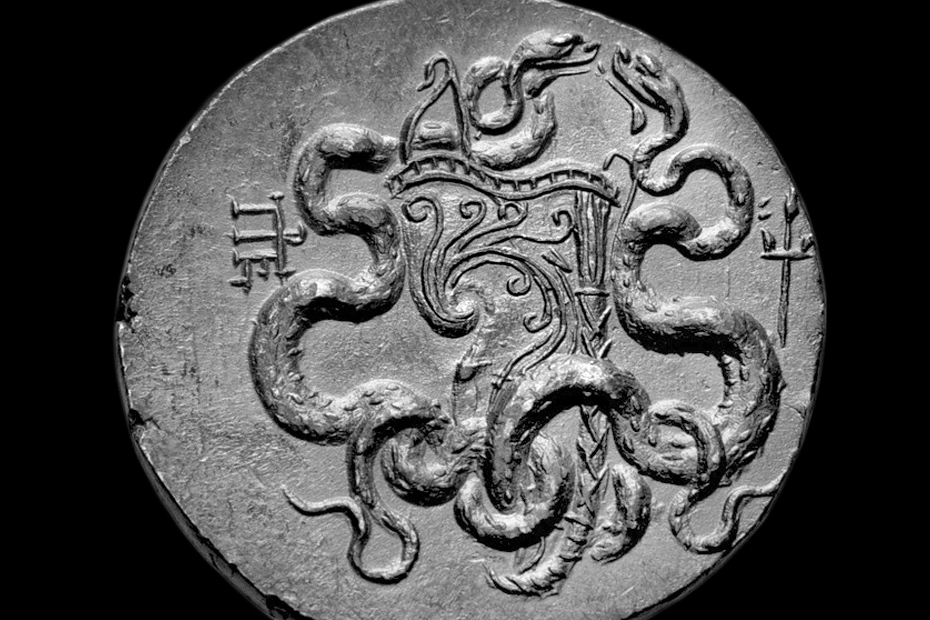
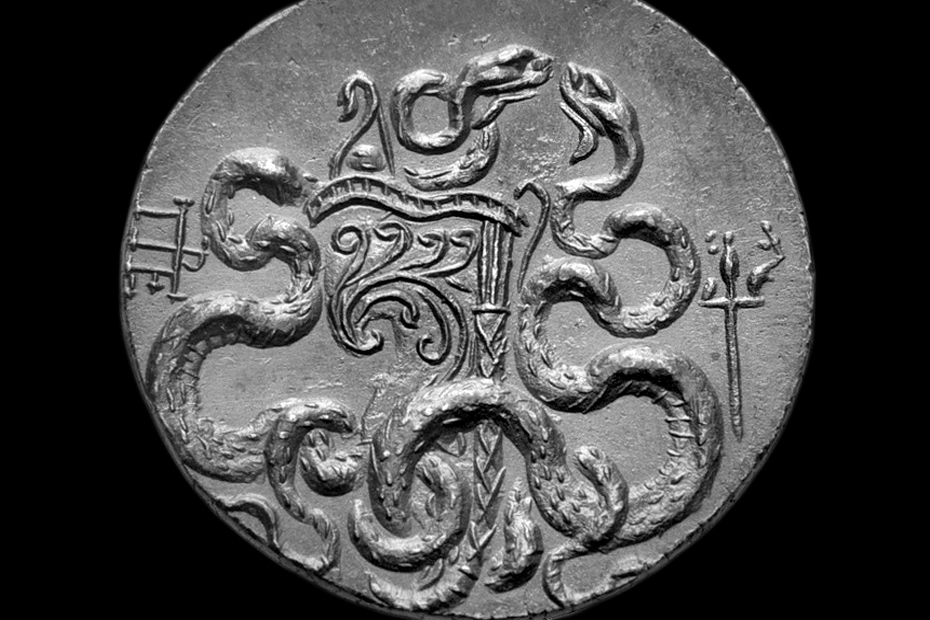
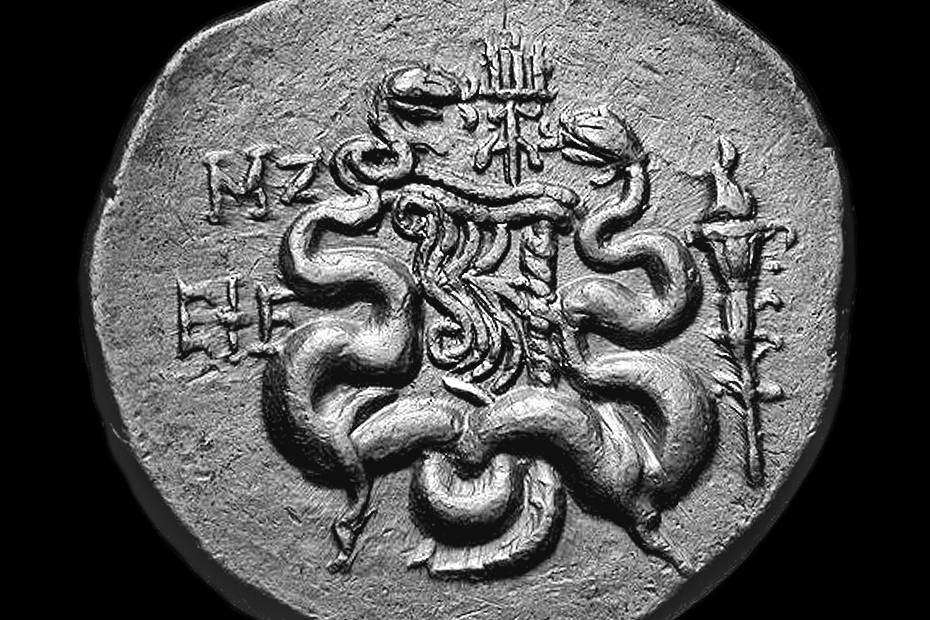
Set III-6-tri-001. In ancient mythology, trident was a three-pronged spear, which served as an attribute of main gods. In the Greek and Roman tradition, triaina (tridens) was the weapon of Poseidon (Neptune), god of the sea. Trident also served as an attribute of Britannia after the Roman conquest. In the Indian tradition, trisula was the attribute of Shiva the Destroyer and Durga. Trident was the instrument of control over the bodies of water: ocean, sea, rivers, etc. It could also be used to cause earthquakes and violent storms.
------------------------------------------------- « ● Selected Classical Quotations ● » --------------------------------------------------
“ Most of those living in the cities tend to be encouraged by a pleasing myths, hearing the poets recite mythical deeds of heroism, such as the Labours of Herakles or Theseus, or the honours dispensed to the gods, or, by Zeus, when they see representations, images, or figures that suggest some occurrence of myth. Yet they are dissuaded by the punishments of the gods, fears, or threats, which are acquired through words of some impression of something seen, or even believing that they have encountered them. For a crowd of women or a common mob cannot be persuaded at all by scholarly reason, or summoned to reverence, piety, or faith, for there is also a need for religious fear, which cannot be without myth-making and marvels. A thunderbolt, aegis, trident, torches, snakes [δράκων], and thyrsos lances (the weapons of the gods) are myths, as is all ancient theology. But these things were accepted by the founders of states as certain hobgoblins against childish minds. Such is myth-making, directed toward the social and political character of life as well as the history of facts. „
● Strabo (64/63 BC-24 AD), Geography I: 2, 8 | Translated by Duane W. Roller. Copyright © 2014.
--------------------------------------------------------------------- « ● ● ● » ---------------------------------------------------------------------
“ If Sea-blue-hair [Poseidon] went woman-mad and forced you [Harmonia?], preferring you to Melanippe the sage, sung by the poet, let him make merry in full view, and plant the prongs of his trident as a bridal gift before the gates of Cadmos [Thebes]; so let him bestow the same honour beside snake-cherishing [ἔχιδνα] Dirce, as he gave to lion-breeding Lerna [Nemea?] in the Argive country as a mark of his marriage with Amymone, where the place of the Lernaian nymph still bears the trident's name. „
● Nonnus of Panopolis (late 300s-400s AD), Dionysiaca VIII: 235-242 | Translated by William H. D. Rouse. Copyright © 1940.
| Editorial notes: {...} - Omitted text; [...] - Translation back to the original, clarification, or curator's commentary. |
|
|

 Search Functionality Demonstration